LES LUNDIS DE SAINT-ANTOINE
Bâtiment Kourilsky - 11h–12h
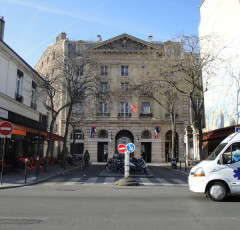
Salle des Conférences (Rez de Chaussée),
184 rue du Faubourg Saint-Antoine, Paris
***
LUNDI 19 JANVIER 2026
Seipin deficiency as a model for severe adipocyte dysfunction
Xavier PRIEUR
Professor, Nantes Université, INSERM U1087
invited by Corinne Vigouroux Team Bruno Fève (Team FEVE (corinne.vigouroux@inserm.fr))
***
Obesity, whose prevalence continues to rise, is a major risk factor for metabolic complications such as type 2 diabetes and MASLD. Numerous studies have highlighted the central role of adipocyte dysfunction in the development of these conditions. Despite recent advances in obesity treatment, structural and functional abnormalities of adipose tissue are generally not corrected, and weight regain remains common. A thorough understanding of the pathogenic mechanisms and management of adipose tissue alterations therefore remains a public health priority. In this context, my group studies the pathophysiology of an extreme model of limited expansion and dysfunction of adipose tissue: congenital generalized lipodystrophy of Berardinelli-Seip (BSCL). This rare disorder is characterized by an almost complete absence of fat mass and severe insulin resistance. Inherited in an autosomal recessive manner, it is caused in about half of cases by mutations in the BSCL2 gene, which encodes seipin, a protein highly expressed in the endoplasmic reticulum (ER) of adipocytes.
We employ both targeted and untargeted approaches to elucidate the pathophysiological mechanisms associated with seipin deficiency and to identify new pathways controlling the metabolic flexibility of adipose tissue. On one hand, our work has characterized the function of seipin at contact sites between the ER, mitochondria, and lipid droplets, demonstrating its central role in lipid metabolism regulation. On the other hand, the comparison of adipose tissue from seipin-deficient and obese mice has revealed common alterations in energy metabolism, particularly in terms of lipogenesis, mitochondrial function, and amino acid metabolism.
INSERM
Kourilsky Building
34 rue Crozatier - 75012 Paris
France
Sorbonne Université Medicine
Saint-Antoine Site
27 rue Chaligny - 75012 Paris
France